Tuscany is one of Italy's most rewarding regions to explore by train. Florence serves as the natural base, with frequent regional services connecting it to Siena, Lucca, and San Gimignano in under ninety minutes. The trains are affordable, the stations sit near the historic centers, and the countryside between stops is part of the experience.
Florence: the city that sets the tone
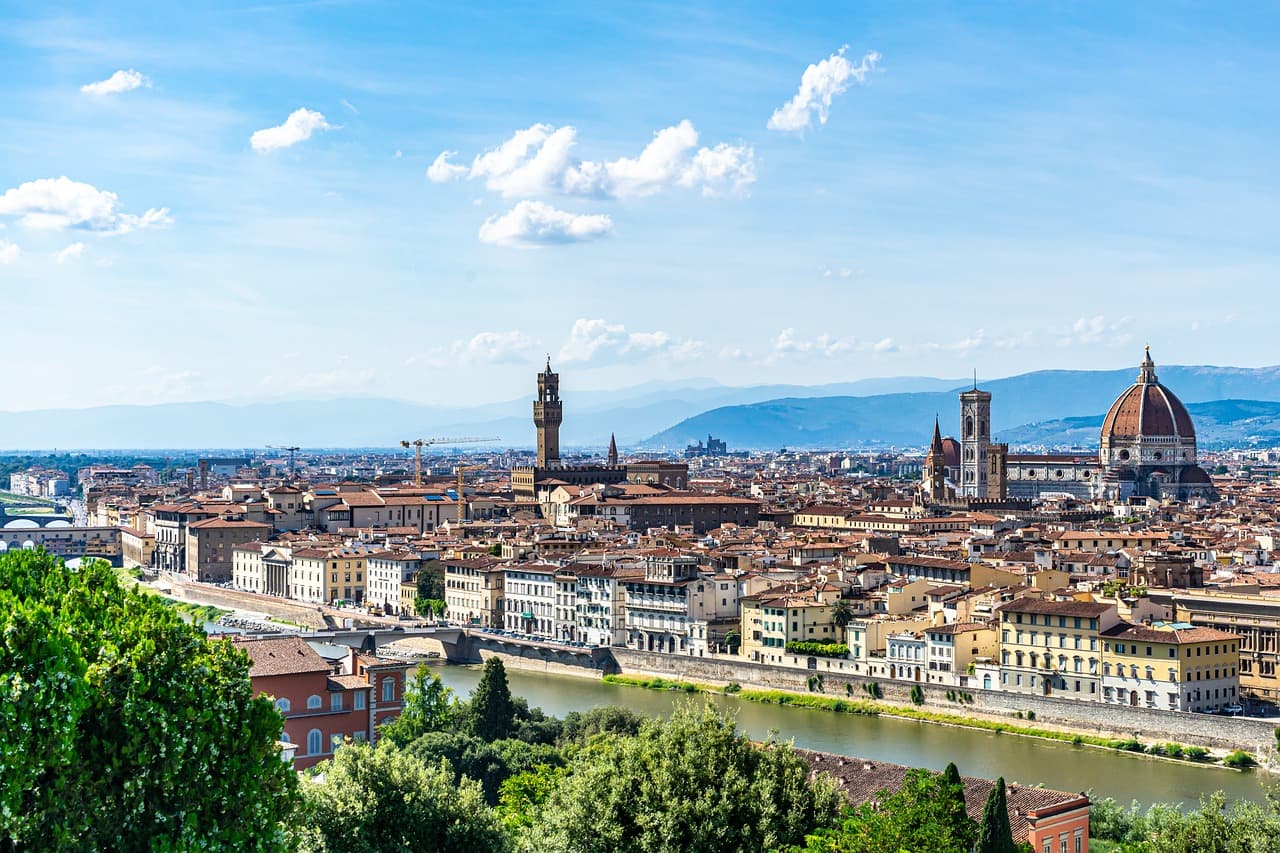
Spend at least one full day in Florence before heading into the countryside. The Uffizi Gallery deserves a morning visit; book a timed entry to avoid the long queues that form by midday. Cross the Ponte Vecchio and climb to Piazzale Michelangelo for a panoramic view of the red-tiled roofs and the dome of the cathedral. In the evening, wander the Santo Spirito neighborhood, where narrow streets lead to small trattorias serving bistecca alla fiorentina and local Chianti. Florence's Santa Maria Novella station is the hub for regional trains. Buy tickets at the station or through the Trenitalia app, and validate your ticket at the yellow machines before boarding.
Siena: medieval squares and the Palio spirit
The train from Florence to Siena takes about seventy-five minutes. Siena's main attraction is the Piazza del Campo, a shell-shaped square that hosts the famous Palio horse race twice a year. Even when no race is scheduled, the piazza is a beautiful place to sit with a glass of wine and watch the city move around you. Visit the Siena Cathedral, whose striped marble facade and inlaid floor are among the most elaborate in Tuscany. Walk the narrow streets of the contrade, the city's historic neighborhoods, each with its own fountain, church, and emblem. Siena feels more medieval and less polished than Florence, and that roughness is part of its charm.
Lucca: walls, towers, and a slower pace
Lucca is about ninety minutes from Florence by regional train. The city is famous for its intact Renaissance walls, which now serve as a tree-lined promenade. Walk or rent a bicycle and complete the circuit in about thirty minutes, enjoying views over the rooftops and the surrounding Apuan Alps. Inside the walls, Lucca's streets are quieter and more residential than Florence or Siena. Visit the Piazza dell'Anfiteatro, built on the foundations of a Roman amphitheater, and climb the Guinigi Tower for a view from the top, where a small garden of holm oaks grows on the roof. Lucca is an excellent choice for travelers who want a relaxed day away from the busiest tourist circuits. San Gimignano, famous for its medieval towers, is a short bus ride from Poggibonsi station and offers a compact hilltop experience.
Where to stay in Florence
The Oltrarno neighborhood, south of the Ponte Vecchio, offers a quieter base with artisan workshops, trattorias, and easy walks to the major sights. Santa Maria Novella is convenient for the train station and early departures. San Lorenzo puts you next to the central market and the Medici Chapels. For budget travelers, hostels near the station offer clean rooms and social atmospheres, while boutique hotels in Santo Spirito combine charm with walkability.